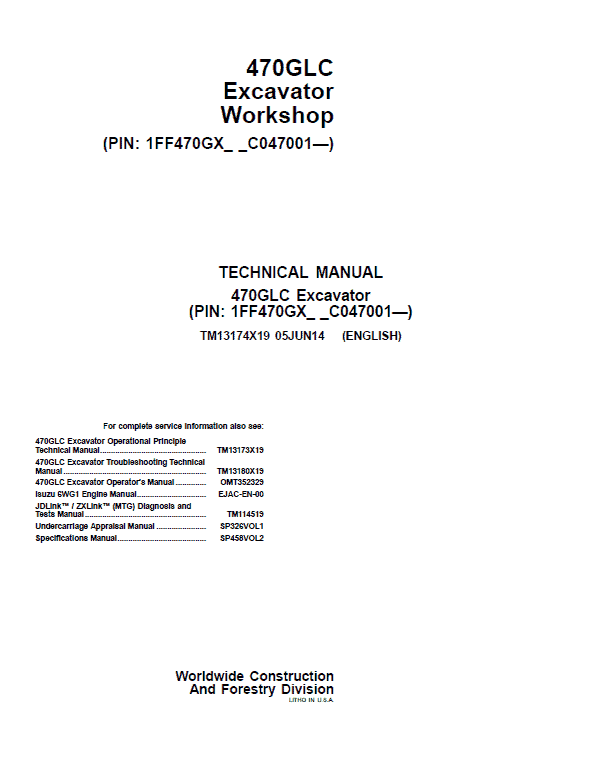
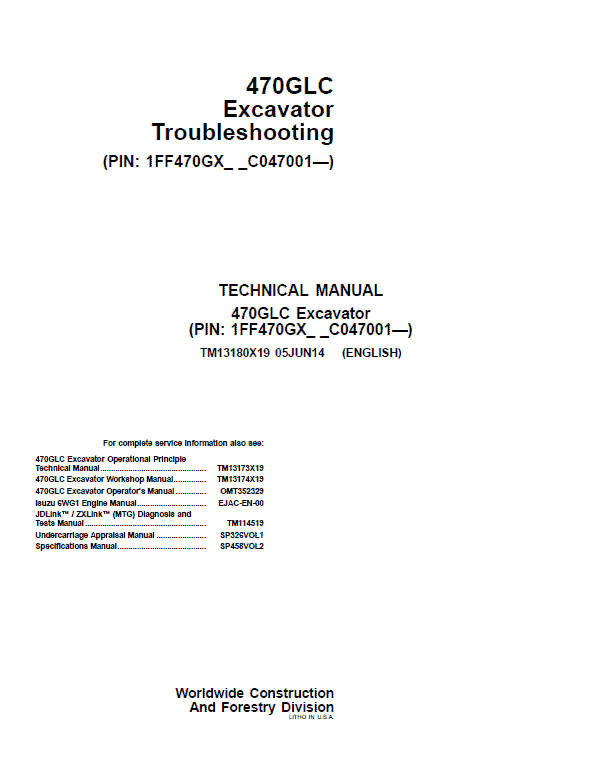
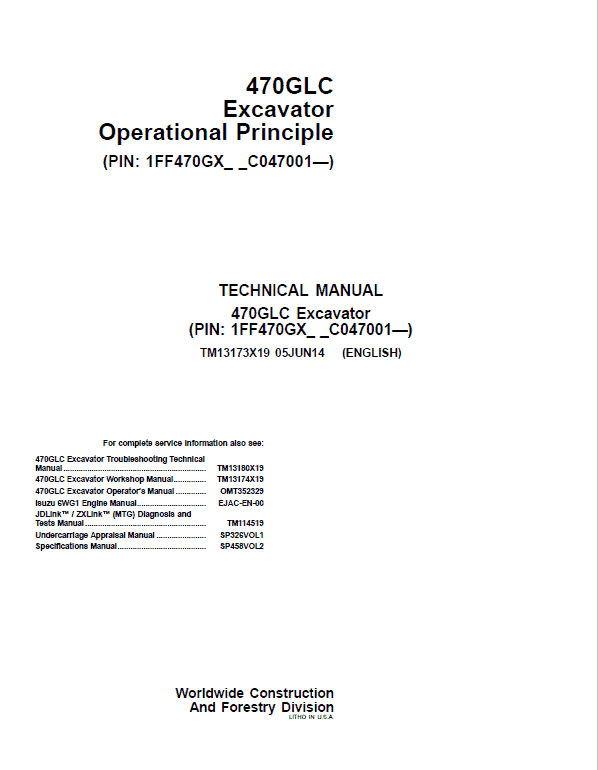
This repair technical manual is for John Deere 470GLC.
Publication reference: TM13173X19 , TM13174X19 and TM13180X19.
Manual Contents and Coverage
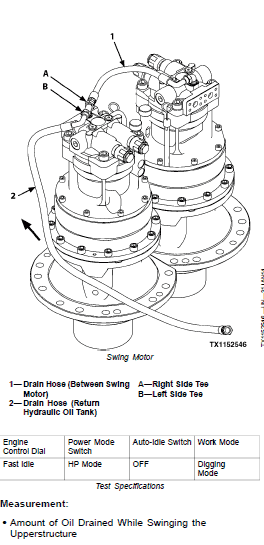
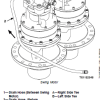
Swing Motor Drainage
Summary:
1. Measure amount of oil draining from the swing motor while swinging the upperstructure and check the swing motor performance.
2. The amount of drain oil from the swing motor will change depending on hydraulic oil temperature.
Preparation:
1. Maintain hydraulic oil temperature at 50±5 °C (122±9 °F). Rotate the swing motor in order to warm inside of the motor.
CAUTION: Avoid possible personal injury from high-pressure fluid. High-pressure release of oil from pressurized system can cause serious burns or penetrating injury. Relieve pressure from hydraulic system before servicing.
2. Stop the engine. Push air bleed valve on top of the hydraulic oil tank and release any remaining pressure.
3. Measure the left swing motor drainage:
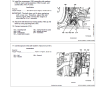
4. Disconnect drain hose (2) at left side tee (B). Connect the test drain hose (3/4-16UN) to the motor side and plug (ST 6637) to drain hose (2).
5. Measure the right swing motor drainage:
6. Disconnect right drain hose (1) at right side tee (A).
Install plug (ST 6491) on the tee side.
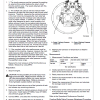
Required Torque……………………………………. 93 N·m (9.5 kgf·m, 70 lb.-ft.)
CAUTION: To avoid personal injury, clear area of all bystanders before doing test. Slowly swing through one complete revolution to ensure that the area is clear of objects before doing test.
Read the safety messages in the introduction of this manual and the cautions presented throughout the text of the manual.
These are divided in two parts: repair and operation and tests. Repair sections tell how to repair the components. Operation and tests sections help you identify the majority of routine failures quickly.
Information is organized in groups for the various components requiring service instruction. At the beginning of each group are summary listings of all applicable essential tools, service equipment and tools, other materials needed to do the job, service parts kits, specifications, wear tolerances, and torque values.
These are concise guides for specific machines. They are on-the-job guides containing only the vital information needed for diagnosis, analysis, testing, and repair.
Use TM13173X19 , TM13174X19 and TM13180X19 with the model and version details above when selecting the manual for your John Deere equipment.


